
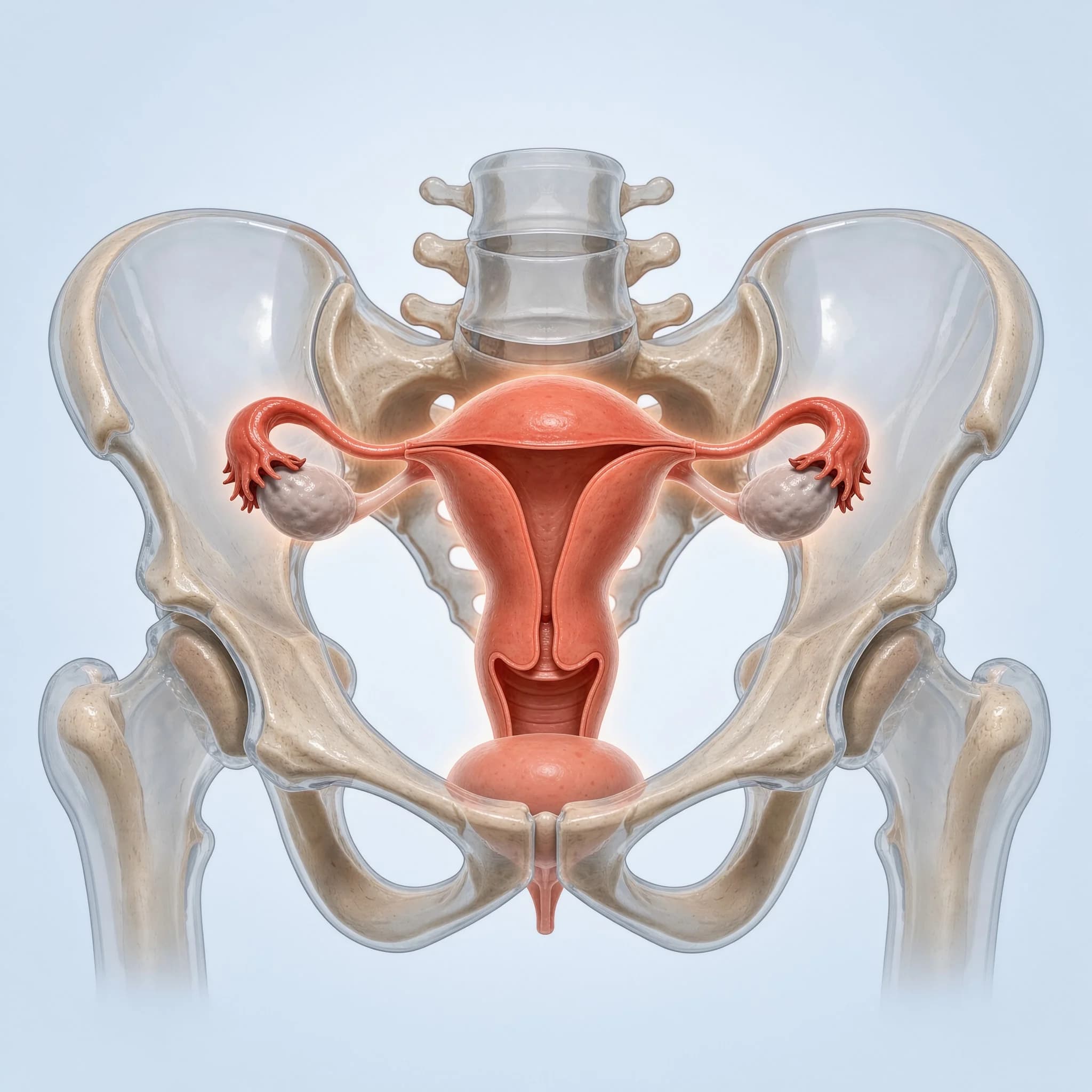
Do I need womb (uterine) cancer surgery?
These are the common reasons Dr. Adil recommends this treatment:
- Any vaginal bleeding after the menopause, even a small spot
- Bleeding between periods, or periods that become much heavier, after the age of 40
- A watery, pink or blood-stained vaginal discharge
- Pain or pressure in the lower tummy or pelvis
- An ultrasound showing a thickened womb lining
- A biopsy of the womb lining that has confirmed cancer
What is uterine (endometrial) cancer?
The womb (uterus, or بچہ دانی) is where a baby grows in pregnancy. Its inner lining is called the endometrium. Most womb cancers start in this lining, which is why they are called endometrial cancer.
The most common type is linked to the hormone oestrogen. Things that raise the risk include being overweight, diabetes, polycystic ovary syndrome (PCOS), never having been pregnant, a late menopause and some hormone medicines. Most women who get it are past the menopause.
It is diagnosed with an ultrasound scan through the vagina to measure the lining, and a biopsy, where a small sample of the lining is taken, sometimes during a hysteroscopy (a thin camera passed into the womb). An MRI or CT scan then shows whether it has spread.
What the operation involves
The standard operation is a total hysterectomy with removal of both tubes and ovaries. The ovaries are removed because they make the oestrogen that can feed this cancer, and because the cancer can spread to them.
Lymph nodes in the pelvis may also be checked or removed, and fluid from the tummy may be sampled. These help your team decide whether you need any treatment after surgery.
- Keyhole surgery: a few small cuts, less pain, home in one to three nights, faster return to normal
- Open surgery: one cut on the lower tummy, used for a large womb or when keyhole surgery is not safe
- Either way, the womb is removed whole so that cancer cells are not spread
Surgery as part of your team plan
For many women with early womb cancer, surgery is the only treatment needed. Others are advised to have radiotherapy afterwards, either from outside the body or from inside the vagina (brachytherapy), or chemotherapy. The laboratory report on the removed womb decides this.
Dr. Adil works alongside gynaecologists and oncologists so that each step fits into one plan. For women who are not fit for surgery, hormone treatment or radiotherapy may be used instead.
Bleeding after the menopause is never normal. Getting it checked early is the single most important step, because early womb cancer is usually much simpler to treat.
Life after a hysterectomy
After a hysterectomy you will no longer have periods and cannot become pregnant. If you have not yet reached the menopause, removing the ovaries brings it on, with symptoms such as hot flushes and night sweats. Ways to ease these can be discussed.
Most women can resume a normal intimate life once the inside has healed, usually after about six to eight weeks. Regular follow-up visits check that all is well.
Preparing for your operation
At your consultation Dr. Adil will review your scans and biopsy, examine you and explain whether keyhole or open surgery suits you.
- Transvaginal ultrasound and biopsy results
- MRI of the pelvis or CT scan to check for spread
- Blood tests, and an ECG if you have heart problems, diabetes or are older
- Good control of blood sugar and blood pressure before surgery
- Advice on stopping blood thinners before surgery
- No food or drink for about 6–8 hours before surgery
Your surgery day, step by step
- 1
Arrive at hospital
You check in at the hospital, change into a gown and meet the nursing team.
- 2
Meet your surgeon and anaesthetist
Dr. Adil answers your last questions and you sign the consent form. The anaesthetist checks you are fit to go ahead.
- 3
Fall asleep
You receive a general anaesthetic, so you are fully asleep and feel nothing during the operation.
- 4
The operation
The womb, cervix, tubes and ovaries are removed whole, and lymph nodes are checked if needed.
- 5
Wake up in recovery
Nurses watch you as you wake. After keyhole surgery you can usually drink, eat and walk the same day.
Recovery: what to expect
- Day of surgery
Rest and first steps
Some tummy and shoulder discomfort is normal and settles with painkillers. Short walks help.
- Days 1–3
Home
Most women go home within one to three nights after keyhole surgery, or a few days longer after open surgery.
- Weeks 1–2
Light activity
Light vaginal bleeding or discharge is normal. Walk daily and avoid lifting anything heavy.
- Weeks 2–3
Your results and next steps
Dr. Adil goes through the laboratory report with you and explains whether any further treatment is advised.
- Weeks 4–8
Back to normal
Most women are back to normal routines within about four weeks after keyhole surgery, longer after open surgery.
Risks and warning signs
Possible risks
Every operation carries some risk. Most are uncommon and treatable.
- Bleeding or infection of the wound, urine or the top of the vagina
- Injury to the bladder, bowel or the tubes that drain the kidneys
- Blood clots in the legs or lungs, reduced by walking early and blood-thinning injections
- Changing from keyhole to open surgery during the operation, if this is safer
- Menopause symptoms if you had not yet reached the menopause
- Leg swelling (lymphoedema) if lymph nodes are removed
- Risks related to anaesthesia, which are checked for before surgery
Contact us straight away if you have
- Heavy vaginal bleeding, or a foul-smelling discharge
- Fever, chills or shivering
- Tummy pain that is getting worse instead of better
- Burning when passing urine, or being unable to pass urine
- Redness, swelling or pus from a wound
- Breathlessness, chest pain or a swollen leg
What affects the cost of womb (uterine) cancer surgery in Pakistan?
The cost of womb (uterine) cancer surgery in Pakistan is different for every patient. It mainly depends on:
- Keyhole or open surgery
- Whether lymph nodes are removed
- Tests needed before surgery, such as MRI, biopsy and hysteroscopy
- The hospital and room type you choose
- Length of hospital stay
- Laboratory examination of the removed tissue
After your consultation, our team will explain the expected cost for your own case clearly.
Ask on WhatsAppQuestions patients often ask
Is bleeding after the menopause always cancer?
No. It is often caused by thinning of the vaginal lining or a harmless polyp. But it should always be checked, because it is the most common early sign of womb cancer, and early checks lead to early treatment.
Can uterine cancer surgery be done by keyhole?
Yes, for many women. Keyhole hysterectomy usually means less pain, a shorter stay and a faster recovery. Open surgery may be safer if the womb is very large or there has been a lot of earlier surgery. Dr. Adil will advise you.
Will I go through the menopause after surgery?
If you have not reached the menopause yet, removing the ovaries will bring it on. If you are already past the menopause, you will not notice this change. Ways to manage symptoms can be discussed with you.
Will I need radiotherapy or chemotherapy?
Many women with early womb cancer need surgery only. Others are advised to have radiotherapy or chemotherapy, depending on the laboratory report. Your oncologist and Dr. Adil decide this together.
How long is recovery after a hysterectomy for cancer?
After keyhole surgery, most women go home within one to three nights and are back to normal routines in two to four weeks. After open surgery, recovery takes about six to eight weeks.
What does uterine cancer surgery cost in Pakistan?
The cost depends on keyhole or open surgery, whether lymph nodes are removed, the tests you need, the hospital and the length of your stay. After your consultation, our team gives you a clear estimate. Message us on WhatsApp to get started.
Will a female doctor look after me during and after the surgery?
Yes. Dr. Sania Amin, a female consultant gynaecologist, is co-surgeon in your operation and looks after you afterwards, with Dr. Adil Shafi as lead surgeon. You are cared for by a woman doctor before, during and after your surgery.
Where can I get uterine cancer surgery in Islamabad or Rawalpindi?
Dr. Adil Shafi sees patients at Omer Diagnostics and Specialist Clinics, G-8 Markaz, Islamabad, and operates at the hospital best suited to your procedure and situation, with female consultant gynaecologist Dr. Sania Amin as co-surgeon. The clinic is easy to reach from Rawalpindi.
Trusted sources for further reading
- Womb (uterus) cancer · NHS (UK National Health Service)
- Endometrial cancer · American Cancer Society
- Uterine cancer · MedlinePlus (US National Library of Medicine)


Medically reviewed by Dr. Adil Shafi, MBBS, MS, CMIS, MRCPS
Lead surgeon, with female consultant gynaecologist Dr. Sania Amin (opens in a new tab) (MBBS, FCPS) as co-surgeon, during and after your operation
Last reviewed
This guide explains Hysterectomy for Endometrial (Uterine) Cancer in general terms. Every patient is different, and it does not replace a consultation. Please speak to Dr. Adil about your own situation.
Dr. Adil sees patients from Islamabad and Rawalpindi at his clinic in G-8 Markaz. See clinic timings and directions, or browse all gynae surgery guides.