Do I need ovarian cancer surgery?
These are the common reasons Dr. Adil recommends this treatment:
- Bloating or a swollen tummy most days, that does not go away
- Feeling full quickly, or losing your appetite
- Pain or discomfort in the lower tummy or pelvis
- Needing to pass urine more often or more urgently
- A change in bowel habit, or tiredness and weight loss without a clear reason
- An ovarian mass on ultrasound together with a raised CA-125 blood test
What is ovarian cancer?
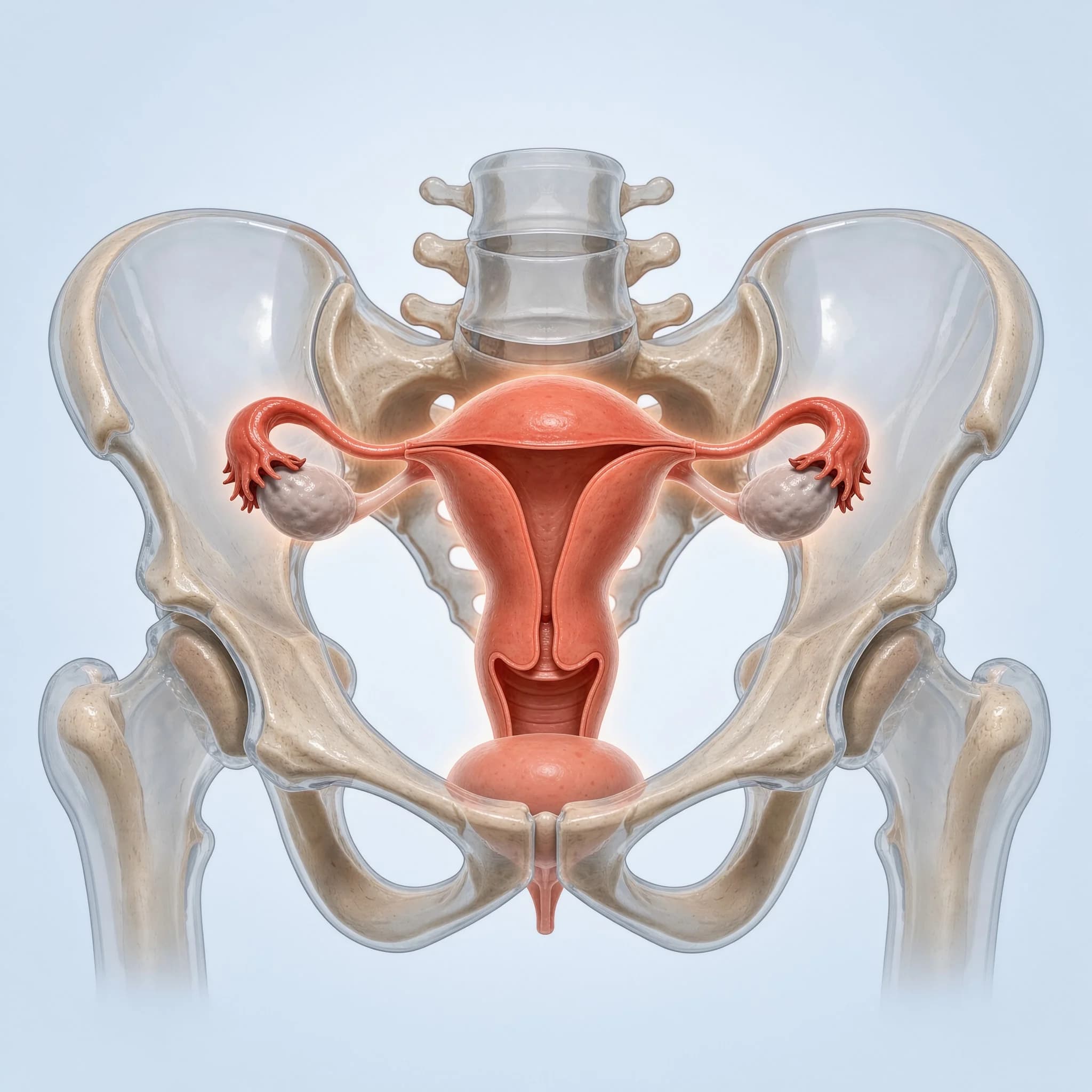
The ovaries (بیضہ دانی) are two small organs on either side of the womb. They release eggs and make the female hormones. Ovarian cancer starts in the ovaries or the nearby fallopian tubes.
Ovarian cancer is hard to spot early because its signs, such as bloating and feeling full, are vague and easy to blame on the stomach. If these symptoms happen most days for more than three weeks, especially after the age of 50, please see a doctor.
The most common type starts in the cells covering the ovary and usually affects older women. Germ cell tumours are rarer and mostly affect girls and young women. A family history of ovarian or breast cancer, including inherited BRCA gene changes, raises the risk.
Doctors use an ultrasound scan, a CT scan and a blood test called CA-125 to judge how likely a mass is to be cancer. The final answer often comes only when the tissue removed at surgery is examined.
What the operation involves
The aim is to remove all the cancer that can be seen, and to take samples that show how far it has spread (staging). The exact operation depends on what is found.
- Removal of both ovaries and fallopian tubes (bilateral salpingo-oophorectomy)
- Removal of the womb and cervix (hysterectomy)
- Removal of the omentum, a fatty apron of tissue inside the tummy where ovarian cancer often spreads
- Samples of lymph nodes and of fluid from the tummy, to check for spread
- Debulking: in more advanced cancer, removing as much visible cancer as possible, sometimes including part of the bowel
- Fertility-sparing surgery: for some young women with early cancer, only the affected ovary is removed
Surgery as part of your team plan
Most women with ovarian cancer need chemotherapy (cancer-killing medicine) as well as surgery. It may be given after the operation, or for a few cycles before it to shrink the cancer, followed by surgery and then more chemotherapy.
Dr. Adil works alongside gynaecologists and oncologists so that your operation and medicines fit into one plan. Genetic testing may also be offered, because the result can help both you and your female relatives.
The earlier ovarian cancer is found, the simpler the treatment usually is. Trust your body: bloating that will not settle deserves a check.
Effects on fertility and menopause
If both ovaries and the womb are removed, you will no longer be able to become pregnant. If you have not yet reached the menopause, removing both ovaries brings it on straight away, with symptoms such as hot flushes, night sweats and vaginal dryness.
If you hope to have children, please tell Dr. Adil before surgery. For some young women with early cancer, it is possible to keep the womb and one ovary. Treatments to ease menopause symptoms can also be discussed, though they are not suitable for everyone.
Preparing for your operation
At your consultation Dr. Adil will review your scans and blood tests and explain what the operation may involve, including what may be decided during surgery.
- Pelvic ultrasound and CT scan of the chest, tummy and pelvis
- Blood tests, including CA-125 and other tumour markers
- Blood count, kidney function and clotting tests, and an ECG
- Bowel preparation, if bowel surgery may be needed
- Advice on stopping blood thinners before surgery
- No food or drink for about 6–8 hours before surgery
Your surgery day, step by step
- 1
Arrive at hospital
You check in at the hospital, change into a gown and meet the nursing team.
- 2
Meet your surgeon and anaesthetist
Dr. Adil answers your last questions and you sign the consent form, which explains what may be removed.
- 3
Fall asleep
You receive a general anaesthetic, so you are fully asleep and feel nothing during the operation.
- 4
The operation
The ovaries, tubes, womb and omentum are removed, the whole tummy is checked, and samples are taken for the laboratory.
- 5
Wake up in recovery
You wake with a drip and usually a urine tube. Nurses watch you closely and control your pain.
Recovery: what to expect
- Days 1–3
First steps
You are helped out of bed early and start drinking and light food. Blood-thinning injections help prevent clots.
- Days 4–7
Home
Once you are eating, walking and comfortable on tablets for pain, you can go home.
- Weeks 2–3
Your results and next steps
Dr. Adil goes through the laboratory report with you, and your oncologist plans your chemotherapy.
- Weeks 3–6
Chemotherapy may begin
If chemotherapy is advised, it usually starts once your wound has healed and you have regained some strength.
- Weeks 6–8
Back to most activities
Most women return to light housework and daily routines. Avoid heavy lifting until your team says it is safe.
Risks and warning signs
Possible risks
Every operation carries some risk. Most are uncommon and treatable.
- Bleeding, sometimes needing a blood transfusion
- Wound, chest or urine infection
- Injury to the bowel, bladder or the tubes that drain the kidneys
- Blood clots in the legs or lungs, which is why blood-thinning injections are given
- Slow return of bowel movement for a few days
- Sudden menopause if you had not yet reached it
- Leg swelling (lymphoedema) if lymph nodes are removed
- Risks related to anaesthesia, which are checked for before surgery
Contact us straight away if you have
- Fever, chills or shivering
- Tummy pain that is getting worse, or a swollen tummy
- Vomiting that won't stop
- Heavy vaginal bleeding or a foul-smelling discharge
- Burning when passing urine, or being unable to pass urine
- Redness, swelling or pus from the wound
- Breathlessness, chest pain or a swollen leg
What affects the cost of ovarian cancer surgery in Pakistan?
The cost of ovarian cancer surgery in Pakistan is different for every patient. It mainly depends on:
- The extent of surgery, such as staging alone or debulking with bowel surgery
- Tests needed before surgery, such as CT scans and tumour markers
- The hospital and room type, and whether intensive care is needed
- Length of hospital stay
- Laboratory examination of the removed tissue
- Genetic testing, if offered
After your consultation, our team will explain the expected cost for your own case clearly.
Ask on WhatsAppQuestions patients often ask
Can ovarian cancer be found early?
It can be hard, because early signs are vague. The best protection is to see a doctor if bloating, feeling full quickly, tummy pain or needing to pass urine more often happen most days for more than three weeks. Women with a strong family history may be offered genetic testing.
Is every ovarian cyst cancer?
No. Most ovarian cysts are harmless and many go away on their own. An ultrasound, and sometimes a CA-125 blood test, help decide which ones need surgery.
Can I still have children after ovarian cancer surgery?
If both ovaries and the womb are removed, pregnancy is no longer possible. For some young women with early cancer, it may be safe to keep the womb and one ovary. Please discuss this with Dr. Adil before surgery.
Will I need chemotherapy?
Most women with ovarian cancer do. It may be given after surgery, or partly before it to shrink the cancer. Your oncologist and Dr. Adil decide this together based on the stage and type of cancer.
How long is recovery after ovarian cancer surgery?
Most women stay in hospital for four to seven days and return to most daily activities after six to eight weeks. Chemotherapy, if needed, can make overall recovery take longer.
What does ovarian cancer surgery cost in Pakistan?
The cost depends on the extent of surgery, the tests you need, whether intensive care is needed, the hospital and the length of your stay. After your consultation, our team gives you a clear estimate. Message us on WhatsApp to get started.
Will a female doctor look after me during and after the surgery?
Yes. Dr. Sania Amin, a female consultant gynaecologist, is co-surgeon in your operation and looks after you afterwards, with Dr. Adil Shafi as lead surgeon. You are cared for by a woman doctor before, during and after your surgery.
Where can I get ovarian cancer surgery in Islamabad or Rawalpindi?
Dr. Adil Shafi sees patients at Omer Diagnostics and Specialist Clinics, G-8 Markaz, Islamabad, and operates at the hospital best suited to your procedure and situation, with female consultant gynaecologist Dr. Sania Amin as co-surgeon. The clinic is easy to reach from Rawalpindi.
Trusted sources for further reading
- Ovarian cancer · NHS (UK National Health Service)
- Ovarian cancer · American Cancer Society
- Ovarian cancer · MedlinePlus (US National Library of Medicine)
Medically reviewed by Dr. Adil Shafi, MBBS, MS, CMIS, MRCPS
Lead surgeon, with female consultant gynaecologist Dr. Sania Amin (opens in a new tab) (MBBS, FCPS) as co-surgeon, during and after your operation
Last reviewed
This guide explains Staging and Debulking Surgery for Ovarian Cancer in general terms. Every patient is different, and it does not replace a consultation. Please speak to Dr. Adil about your own situation.
Dr. Adil sees patients from Islamabad and Rawalpindi at his clinic in G-8 Markaz. See clinic timings and directions, or browse all gynae surgery guides.