Do I need keyhole surgery for the womb and ovaries?
These are the common reasons Dr. Adil recommends this treatment:
- Very painful periods that stop you from your daily routine
- Heavy or long periods, sometimes with tiredness from low blood (anaemia)
- Pain or pressure low in the tummy or pelvis that keeps coming back
- Pain during intercourse
- A cyst on the ovary or a fibroid (رسولی) seen on ultrasound that is large, growing or causing symptoms
- Difficulty getting pregnant, where a keyhole look inside may find the cause
- Sudden severe lower tummy pain with a missed period or a positive pregnancy test (possible ectopic pregnancy: go to hospital now)
What is laparoscopic gynaecological surgery?
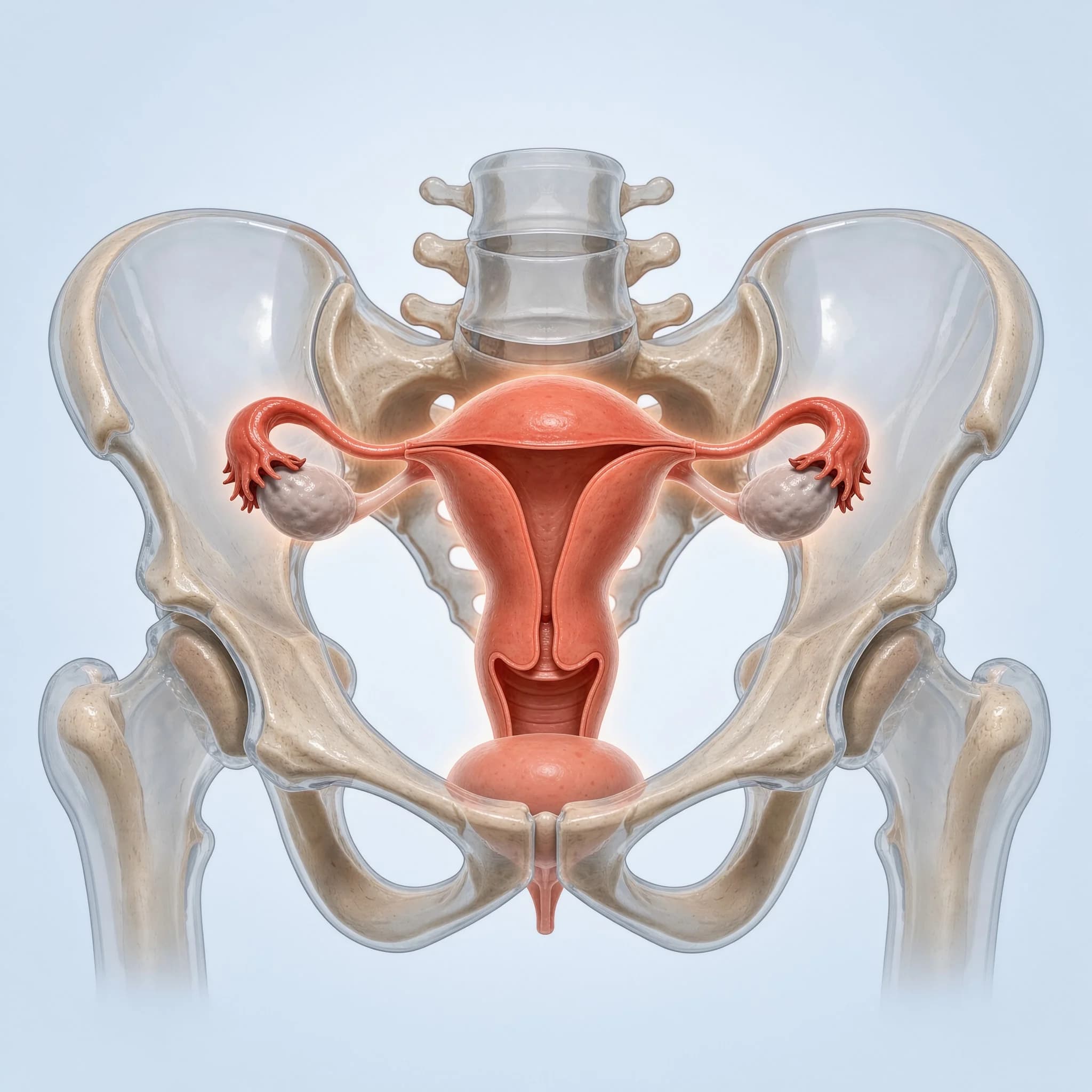
It is keyhole surgery on the female organs in the pelvis. A thin camera (laparoscope) is passed through a small cut at the belly button, and two or three more small cuts of 0.5–1 cm are made low on the tummy for fine instruments. The camera gives a magnified view of the womb, ovaries and tubes on a screen.
Because the cuts are small, there is usually less pain, smaller scars and a quicker return to home and work than with open surgery through one larger cut. The approach is suitable for married and unmarried women, and the plan is tailored to your symptoms, scan results and wishes about future pregnancy.
Conditions treated with keyhole gynae surgery
These are the most common reasons for laparoscopic gynaecological surgery. Your consultation will make clear which, if any, applies to you.
- Ovarian cysts: fluid-filled or solid swellings on the ovary. Many settle by themselves, but cysts that persist, grow or cause pain can be removed (cystectomy) while keeping the healthy ovary.
- Fibroids (بچہ دانی کی رسولی): non-cancerous growths in the muscle of the womb. In selected cases they can be cut out and the womb stitched (myomectomy), keeping the womb for future pregnancy.
- Endometriosis: tissue like the womb lining growing outside the womb, causing painful periods and sometimes infertility. Patches and scar tissue are removed or sealed.
- Ectopic pregnancy: a pregnancy growing outside the womb, usually in a tube. This is an emergency. The pregnancy, and sometimes the damaged tube, is removed.
- Hysterectomy: removal of the womb for problems such as heavy bleeding or large fibroids when other treatments haven't helped and no further pregnancy is planned.
- Diagnostic laparoscopy: a keyhole look for the cause of long-term pelvic pain or difficulty conceiving, often with treatment at the same time
Keyhole surgery vs open surgery
Open gynae surgery uses one cut of about 10–15 cm across the lower tummy. Keyhole surgery can do many of the same operations through small cuts.
- Less pain after surgery
- Small scars that fade well
- Home the same day or after one night in many cases
- A quicker return to housework, family and work
- A magnified view that shows small patches of endometriosis or fine scar tissue
Will surgery affect my chance of having children?
Protecting fertility is a key part of the plan for women who hope to have children. Where it is safe, the healthy part of the ovary, the tube and the womb are kept. Treating endometriosis, cysts or scar tissue can, for some women, make it easier to conceive afterwards.
Some operations do change fertility. Removing the womb (hysterectomy) means pregnancy is no longer possible, and removing a tube or ovary may reduce the chances. Dr. Adil will explain clearly how your operation may affect future pregnancy and when it is safe to try to conceive, before you agree to anything.
Preparing for your operation
At your consultation Dr. Adil will ask about your periods, pain, pregnancies and plans for the future, and review your scans. You are welcome to bring a family member with you. Before surgery you will usually need a few tests.
- A pelvic ultrasound, and sometimes an MRI for complex cysts or fibroids
- Blood tests: blood count, blood group and, when needed, hormone or tumour-marker tests
- A pregnancy test before surgery
- Advice on stopping blood thinners or adjusting diabetes medicine
- No food or drink for about 6–8 hours before surgery
Your surgery day, step by step
- 1
Arrive at hospital
You check in at the hospital, change into a gown and meet the nursing team.
- 2
Meet your surgeon and anaesthetist
Dr. Adil goes over the plan again, including what will be done if something unexpected is found, and you sign the consent form. The anaesthetist checks you are fit to go ahead.
- 3
Fall asleep
You receive a general anaesthetic, so you are fully asleep and feel nothing. A thin tube (catheter) may drain the bladder during the operation.
- 4
Keyhole surgery
The tummy is gently filled with gas. The cyst, fibroid, endometriosis or other problem is treated, and any removed tissue is taken out in a small bag and sent for testing.
- 5
Wake up in recovery
Nurses watch you as you wake. You can usually drink within a few hours and walk later the same day.
Recovery: what to expect
- Day of surgery
Rest and first steps
Lower tummy soreness and shoulder-tip pain from the gas are normal and settle with painkillers over a day or two. Light vaginal spotting can occur.
- Days 0–2
Home
Many women go home the same day or after one night. After a hysterectomy or a larger operation, the stay may be one to two nights.
- Week 1
Light activity
Walk every day and do light tasks at home. Keep the wounds clean and dry. Most women can drive after about a week, once comfortable.
- Weeks 1–2
Back to work
Office work and light housework are usually fine after one to two weeks. Your follow-up visit checks the wounds and reviews the tissue report.
- Weeks 4–6
Full activity
Heavy lifting and strenuous exercise usually wait three to four weeks, or about six weeks after a hysterectomy. Intercourse usually waits two weeks, or six weeks after a hysterectomy.
Risks and warning signs
Possible risks
Every operation carries some risk. Most are uncommon and treatable.
- Bleeding or infection at a wound or inside the pelvis
- Injury to the bladder, bowel or the tubes that carry urine from the kidneys (ureters): rare but serious
- New scar tissue (adhesions) forming inside the pelvis
- Cysts, fibroids or endometriosis coming back in the future
- Needing to change to open surgery for safety
- Blood clots in the legs, reduced by walking early
- Risks related to anaesthesia, which are checked for before surgery
Contact us straight away if you have
- Fever, chills or shivering
- Lower tummy pain that is getting worse instead of better
- Heavy vaginal bleeding or a foul-smelling discharge
- Redness, swelling or pus from a wound
- Pain or difficulty passing urine, or vomiting that won't stop
- Breathlessness, chest pain or a swollen leg
What affects the cost of keyhole surgery for the womb and ovaries in Pakistan?
The cost of keyhole surgery for the womb and ovaries in Pakistan is different for every patient. It mainly depends on:
- The type of operation (cyst removal, myomectomy, endometriosis treatment, ectopic pregnancy or hysterectomy)
- The size and number of cysts or fibroids, and how much endometriosis or scar tissue there is
- Whether the surgery is planned or an emergency
- Tests needed before surgery, such as MRI or tumour markers, and the tissue report afterwards
- Length of hospital stay and the room type you choose
After your consultation, our team will explain the expected cost for your own case clearly.
Ask on WhatsAppQuestions patients often ask
Does every ovarian cyst need an operation?
No. Many cysts are linked to the monthly cycle and go away by themselves within a few months, so a repeat ultrasound is often advised first. Surgery is considered when a cyst is large, keeps growing, causes pain, or looks unusual on the scan.
Can fibroids be removed without removing the womb?
Often, yes. In a myomectomy only the fibroids are removed and the womb is repaired, which keeps the chance of future pregnancy. Whether this can be done by keyhole depends on the size, number and position of the fibroids.
Is laparoscopic hysterectomy better than open hysterectomy?
When it is suitable, keyhole hysterectomy usually means less pain, a shorter stay and a quicker recovery than open surgery. A very large womb or heavy scarring from earlier operations may make open surgery safer. Dr. Adil will advise which suits you.
Can I get pregnant after laparoscopic surgery?
After most cyst, endometriosis and fibroid operations, pregnancy is still possible, and for some women it becomes easier. After a hysterectomy, pregnancy is not possible. You will be told how long to wait before trying to conceive after your operation.
How long is recovery after keyhole gynae surgery?
Most women go home within a day, return to light work in one to two weeks, and resume full activity after three to four weeks. Recovery after a hysterectomy takes longer, usually about six weeks.
What does laparoscopic gynaecological surgery cost in Pakistan?
The cost depends on the type of operation, how complex your condition is, whether it is planned or an emergency, tests needed, and the length of stay. After your consultation, our team gives you a clear estimate. Message us on WhatsApp to get started.
Will a female doctor look after me during and after the surgery?
Yes. Dr. Sania Amin, a female consultant gynaecologist, is co-surgeon in your operation and looks after you afterwards, with Dr. Adil Shafi as lead surgeon. You are cared for by a woman doctor before, during and after your surgery.
Where can I get laparoscopic gynae surgery in Islamabad or Rawalpindi?
Dr. Adil Shafi sees patients at Omer Diagnostics and Specialist Clinics, G-8 Markaz, Islamabad, and operates at the hospital best suited to your procedure and situation, with female consultant gynaecologist Dr. Sania Amin as co-surgeon. Women from across Islamabad and Rawalpindi can reach the clinic easily.
Trusted sources for further reading
- Laparoscopy (keyhole surgery) · NHS (UK National Health Service)
- Ovarian cyst · NHS (UK National Health Service)
- Endometriosis · NHS (UK National Health Service)


Medically reviewed by Dr. Adil Shafi, MBBS, MS, CMIS, MRCPS
Lead surgeon, with female consultant gynaecologist Dr. Sania Amin (opens in a new tab) (MBBS, FCPS) as co-surgeon, during and after your operation
Last reviewed
This guide explains Laparoscopic Gynaecological Procedures in general terms. Every patient is different, and it does not replace a consultation. Please speak to Dr. Adil about your own situation.
Dr. Adil sees patients from Islamabad and Rawalpindi at his clinic in G-8 Markaz. See clinic timings and directions, or browse all gynae surgery guides.