Do I need lipoma removal (fatty lump removal)?
These are the common reasons Dr. Adil recommends this treatment:
- A soft, rubbery lump under the skin that moves slightly when you press it
- A lump on the shoulders, back, neck, arms or thighs that has grown slowly over months or years
- A lump that has become painful or presses on a nerve
- A lump that keeps growing or gets in the way of clothes, a bag strap or a belt
- A lump in a visible place, such as the face, neck or forearm, that you would like removed
- A lump that a doctor is not sure about and wants to examine fully under a microscope
What is a lipoma?
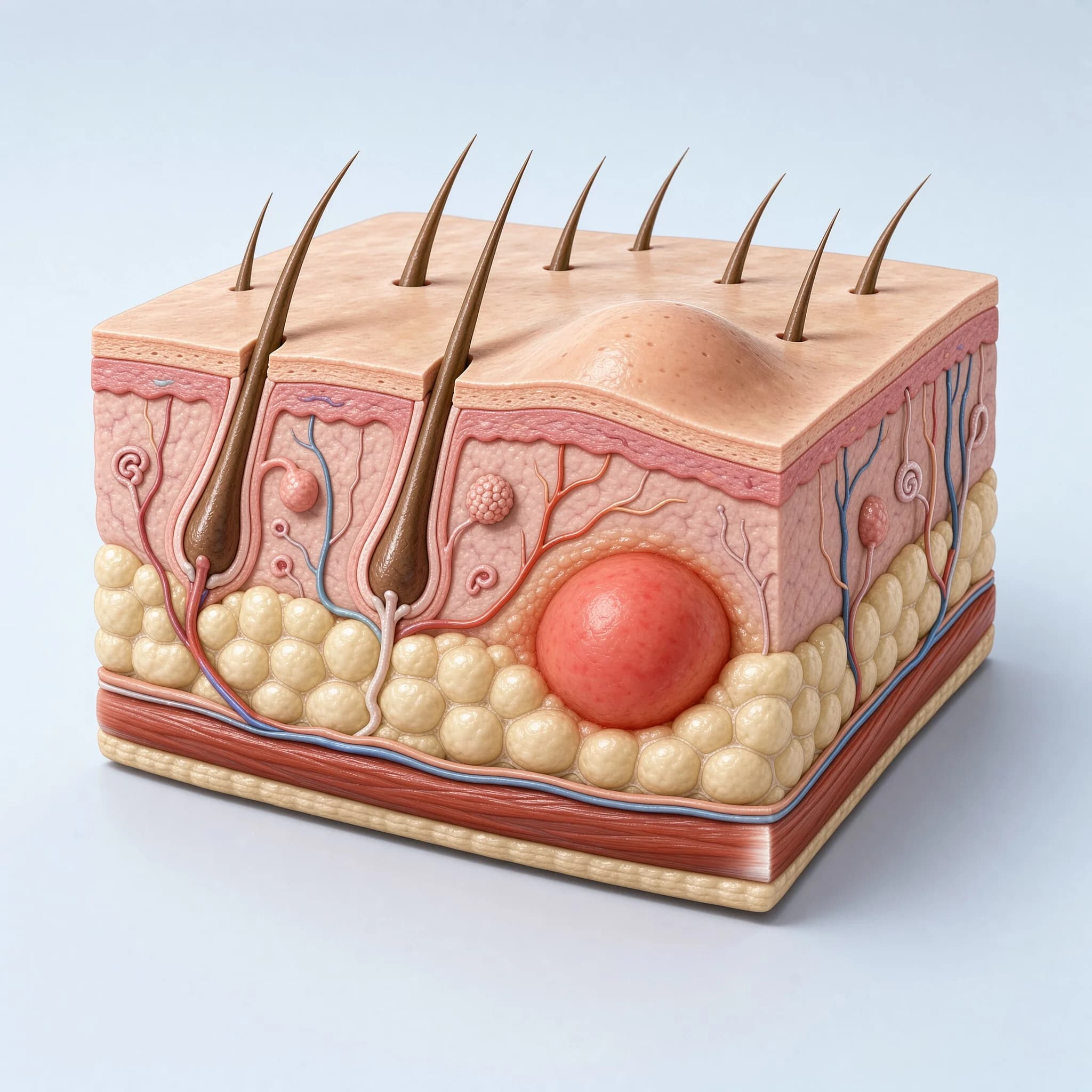
A lipoma is a non-cancerous (benign) lump made of fat cells, usually lying in the fatty layer just under the skin. It feels soft or rubbery, moves a little when you press it and is usually painless. Most are smaller than a few centimetres, though some grow larger.
Lipomas are common. They are most often noticed between the ages of 40 and 60, but can appear at any age, and some people have more than one. They are most common on the shoulders, back, chest, arms and thighs.
Lipoma meaning in Urdu
In Urdu, a lipoma is usually called چربی کی گلٹی (charbi ki gilti), which means a lump of fat. Whatever it is called, a lipoma is not cancer.
What causes a lipoma?
The exact cause of a lipoma is not known. Most appear without any clear reason, and you cannot prevent them. Some things make them more likely:
- Family history: lipomas can run in families
- Age: they are most often noticed in middle age
- Being overweight, type 2 diabetes or high cholesterol, which are linked with lipomas
- Some people notice one after an injury to that area
- Rare inherited conditions that cause many lipomas, such as familial multiple lipomatosis
Is a lipoma dangerous?
No, a lipoma is harmless and a lipoma turning into cancer is extremely rare. The main reasons to remove one are pain, growth, pressure on a nerve, or how it looks.
However, a rare fatty cancer called liposarcoma can look like a lipoma at first. This is why any new lump should be checked by a doctor once. Dr. Adil examines the lump and, if anything is unusual, arranges an ultrasound scan, sometimes an MRI or CT scan, or a small sample (biopsy) before deciding on treatment.
When should a lump be checked with a scan?
See a doctor soon, rather than waiting, if your lump has any of these features. Most such lumps still turn out to be harmless, but they need a scan to be sure.
- It is growing quickly, over weeks rather than years
- It feels hard, or does not move when you press it
- It seems deep, under or inside the muscle
- It is large, about 5 cm or more (roughly the size of a golf ball)
- It has become painful, red or hot
- A lump has come back after it was removed
Does lipoma removal cream work?
No. No cream, oil, ointment, tablet or herbal remedy has been shown to dissolve or remove a lipoma. A lipoma is a lump of fat inside its own thin covering (capsule) under the skin, and nothing rubbed on the skin can break it down.
Lipoma removal creams are widely sold online, but the treatments that actually remove a lipoma are surgery (excision) and, for some, liposuction. Spending money on creams also delays a proper check of the lump. If a lipoma is not bothering you, the honest alternative to surgery is simply to leave it alone and watch it.
How is lipoma removal done?
Most lipomas are removed by a small operation called an excision, under local anaesthetic. The skin is numbed with an injection, a cut is made over the lump, and the lipoma is gently freed and lifted out whole, together with its thin capsule. Removing it completely is what stops it from coming back in the same place.
The cut is then closed with stitches, which may be dissolving. Very large or deep lipomas may be removed under general anaesthesia (fully asleep). The lump is often sent to the laboratory to confirm the diagnosis.
For some larger lipomas, liposuction (sucking the fat out through a thin tube) is an option. It leaves smaller scars, but a lipoma is more likely to come back after liposuction because the capsule may be left behind. Dr. Adil will explain which method suits your lump.
Your surgery day, step by step
- 1
Examination and plan
Dr. Adil examines the lump, asks how long you have had it and whether it has changed, and arranges a scan if needed.
- 2
Consent and marking
He explains the procedure, the scar and the risks, and you sign the consent form. The lump is marked on the skin.
- 3
Numbing
The skin is cleaned and numbed with a local anaesthetic injection, which stings for a moment. Very large or deep lipomas are removed while you are asleep.
- 4
Removing the lipoma
A cut is made over the lump and the lipoma is lifted out whole in its capsule. You may feel pressure or pulling, but not pain.
- 5
Closing the wound and going home
The cut is closed with stitches and covered with a dressing. Most people go home the same day with painkillers and wound-care advice.
Recovery: what to expect
- First few hours
Numbness wears off
The area stays numb for a few hours. Mild pain afterwards is usually controlled with simple painkillers such as paracetamol.
- Days 1–7
Light activity
Some tenderness, swelling and bruising are normal and usually settle within about a week. Keep the dressing clean and dry and avoid straining the area.
- Around day 7
Stitches
Dissolving stitches disappear on their own. Other stitches are removed at a follow-up visit, usually after about a week.
- Follow-up
Results
If the lump was sent to the laboratory, Dr. Adil goes through the result with you. Almost always it confirms a harmless lipoma.
- Months
Scar fades
The scar is pink at first and slowly fades. A new lipoma may appear elsewhere on the body, but it rarely returns in the same place after full removal.
Risks and warning signs
Possible risks
Every operation carries some risk. Most are uncommon and treatable.
- A scar where the cut was made
- Bruising, swelling or a small collection of blood or fluid under the wound
- Wound infection, usually minor and treated with antibiotics
- The wound opening slightly before it heals
- The lipoma coming back, which is rare after full excision but more likely after liposuction
- Risks of general anaesthesia, if it is used for a large or deep lipoma
Contact us straight away if you have
- Redness, heat or swelling spreading around the wound
- Pus or a bad smell from the wound
- Fever or feeling unwell
- Bleeding that soaks through the dressing
- A tense, growing swelling under the wound
- Pain that gets worse instead of better
What affects the cost of lipoma removal (fatty lump removal) in Pakistan?
The cost of lipoma removal (fatty lump removal) in Pakistan is different for every patient. It mainly depends on:
- The size, depth and location of the lipoma
- How many lipomas are being removed
- Local anaesthetic, or general anaesthesia for large or deep lipomas
- Excision or liposuction
- Scans or a biopsy needed before surgery
- Laboratory testing of the removed lump
After your consultation, our team will explain the expected cost for your own case clearly.
Ask on WhatsAppQuestions patients often ask
Is lipoma removal painful?
The area is numbed first, so the removal itself should not hurt, although the numbing injection stings for a moment. Afterwards there is usually mild soreness for a few days, eased by simple painkillers.
Can a lipoma be treated without surgery?
A lipoma that is not causing problems can simply be left alone and watched. No cream, tablet or herbal remedy removes a lipoma. If you want it gone, the options are surgical removal or, for some lipomas, liposuction.
Do lipoma removal creams work?
No. No cream or ointment has been shown to dissolve a lipoma, because the fat lump sits under the skin inside its own capsule. Surgery is the reliable way to remove it.
Is a lipoma dangerous or can it become cancer?
A lipoma is harmless, and it turning into cancer is extremely rare. A rare cancer called liposarcoma can look similar, so a lump that grows fast, is hard, deep, painful or larger than about 5 cm should be checked and scanned.
Will my lipoma come back after removal?
A lipoma rarely comes back in the same place when it is removed completely with its capsule. It is more likely to return after liposuction. A new lipoma can still appear somewhere else on the body.
How long is recovery after lipoma removal?
Most people go home the same day and do light activities straight away. Soreness and bruising usually settle within about a week, and stitches, if they need removing, usually come out after about a week.
What does lipoma removal cost in Pakistan?
The cost depends on the size, depth and number of lipomas, whether local or general anaesthesia is needed, and any scans or laboratory tests. After your consultation, our team gives you a clear estimate. Message us on WhatsApp to get started.
Where can I get lipoma removal in Islamabad or Rawalpindi?
Dr. Adil Shafi sees patients at Omer Diagnostics and Specialist Clinics, G-8 Markaz, Islamabad, and operates at the hospital best suited to your procedure and situation. The clinic is easy to reach from Rawalpindi.
Trusted sources for further reading
- Lipoma · NHS (UK National Health Service)
- Lipoma · Cleveland Clinic
- Lipoma · DermNet (New Zealand)
- Benign skin conditions · British Association of Plastic, Reconstructive and Aesthetic Surgeons (BAPRAS)
- Soft tissue sarcoma: referral to a specialist · Cancer Research UK

Medically reviewed by Dr. Adil Shafi, MBBS, MS, CMIS, MRCPS
Last reviewed
This guide explains Lipoma Excision in general terms. Every patient is different, and it does not replace a consultation. Please speak to Dr. Adil about your own situation.
Dr. Adil sees patients from Islamabad and Rawalpindi at his clinic in G-8 Markaz. See clinic timings and directions, or browse all general surgery guides.