
Do I need ectopic pregnancy treatment?
These are the common reasons Dr. Adil recommends this treatment:
- A missed period or a positive pregnancy test, with pain low in the tummy on one side
- Vaginal bleeding or a brown, watery discharge in early pregnancy
- Pain in the tip of the shoulder, which can be a sign of bleeding inside the tummy
- Discomfort or pain when passing urine or opening your bowels
- Symptoms usually start between weeks 4 and 12 of pregnancy, but some women have none
- EMERGENCY: sudden, sharp, severe tummy pain, dizziness or fainting, feeling sick, or looking very pale. Go to the nearest emergency department now.
What is an ectopic pregnancy?
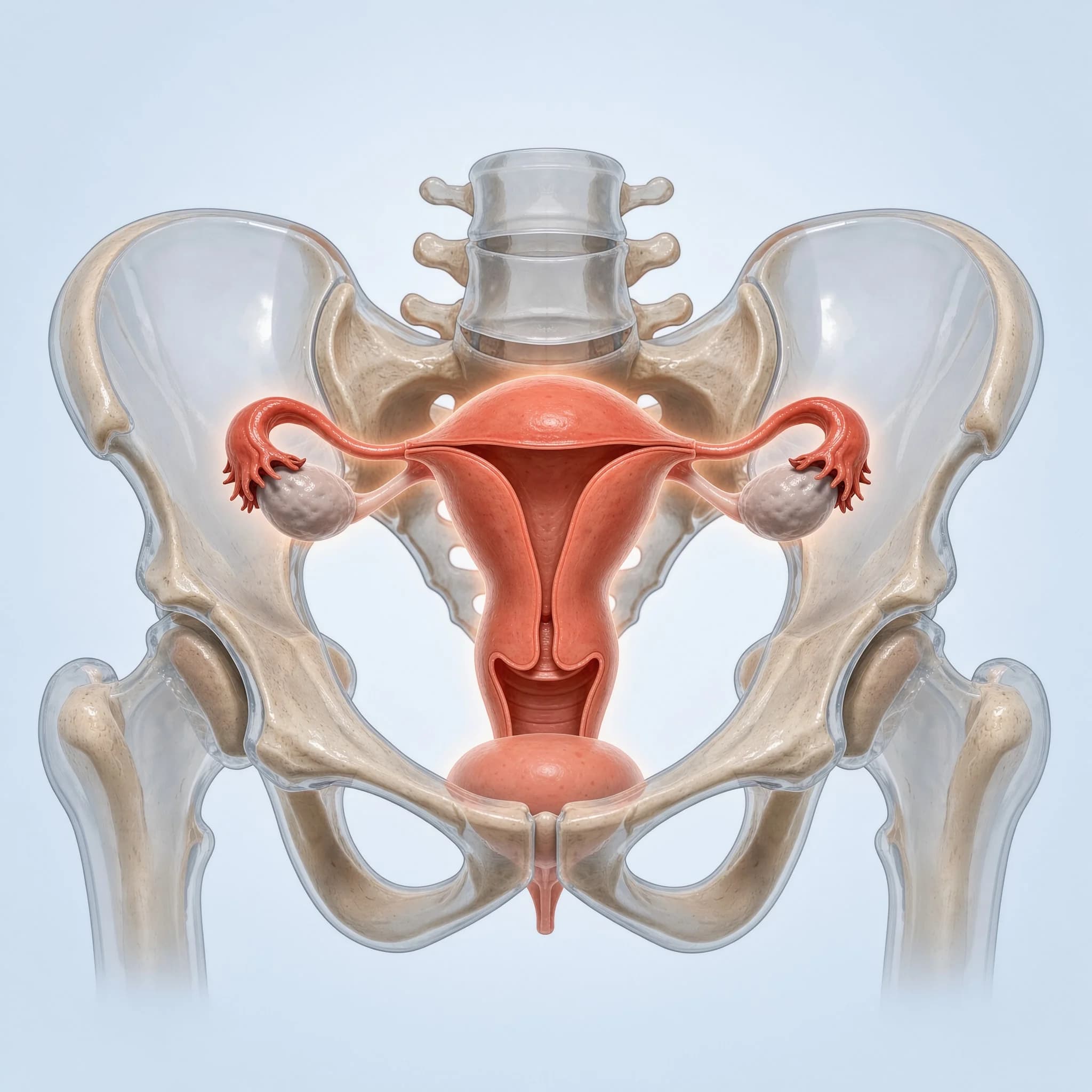
An ectopic pregnancy is when a fertilised egg attaches and starts to grow outside the womb. In a normal pregnancy, the egg travels down a fallopian tube (the thin tube between the ovary and the womb) and settles in the womb lining. In an ectopic pregnancy it gets stuck on the way, usually in the tube. Rarely, it settles on the ovary, in the neck of the womb (cervix) or elsewhere in the tummy.
About 1 in every 90 pregnancies is ectopic. Sadly, the pregnancy cannot be saved, because the tube cannot stretch to hold a growing baby. As it grows, the tube can burst (rupture) and bleed. This is not caused by anything you did, and treating it protects your health and your chances of a future pregnancy.
Ectopic pregnancy symptoms and emergency signs
The most common ectopic pregnancy symptoms are pain low in the tummy on one side and bleeding in early pregnancy, after a missed period. Some women also have shoulder-tip pain, or pain when passing urine or opening the bowels. These signs can also come from less serious problems, such as a stomach upset, so they always need checking by a doctor.
Get medical help the same day if you have these symptoms and could be pregnant, even if a pregnancy test was negative or you were using contraception. Go to the nearest emergency department now, without waiting for a clinic appointment, if you have:
- Sudden, sharp and severe pain in the tummy
- Dizziness, fainting or feeling faint
- Feeling sick, or looking very pale
- Strong pressure in the back passage (rectum), or shoulder-tip pain with any of the above
What causes an ectopic pregnancy, and who is at risk?
An ectopic pregnancy usually happens when the tube is damaged or narrowed, so the egg cannot pass through. Often no cause is found, and it can happen to anyone. Things that raise the risk include:
- A previous ectopic pregnancy
- Past infection in the pelvis (pelvic inflammatory disease), or earlier surgery on the tubes, including sterilisation
- Becoming pregnant with a coil (IUD) in place or while taking the progestogen-only pill
- Fertility treatment such as IVF
- Endometriosis, smoking, and being over 35
How is an ectopic pregnancy diagnosed?
An ectopic pregnancy is diagnosed with a pregnancy test, an internal (transvaginal) ultrasound scan and blood tests for the pregnancy hormone hCG. The ultrasound probe is placed gently in the vagina, which gives the clearest picture of the womb and tubes in early pregnancy.
If the scan cannot yet show where the pregnancy is, the hCG blood test is usually repeated after 48 hours. Once hCG reaches a certain level, a pregnancy in the womb should be visible on the scan; if it is not, an ectopic pregnancy may be the cause. Occasionally a keyhole look inside the tummy (laparoscopy) is needed to be sure.
Ectopic pregnancy treatment: monitoring, medicine or surgery
There are three main ways to treat an ectopic pregnancy. Which one suits you depends on your pain, your hCG level, the size of the pregnancy on the scan, whether a heartbeat is seen, and whether you can come back for blood tests.
- Watchful waiting (expectant management): if you are well, have no pain, the pregnancy is small and hCG is low and falling, it may settle by itself. You have regular hCG blood tests until the level returns to normal.
- Methotrexate injection: a medicine that stops the pregnancy growing, offered when there is no significant pain, the pregnancy is small (under 3.5 cm), no heartbeat is seen and hCG is below 1,500. Most women need one injection, some need a second, and a few still need surgery.
- Keyhole surgery: advised when there is significant pain, the pregnancy is 3.5 cm or larger, a heartbeat is seen, hCG is 5,000 or more, or you cannot return for follow-up.
- Emergency surgery: if the tube has burst and is bleeding, an operation is needed straight away to stop the bleeding. A blood transfusion may be needed.
Salpingectomy vs salpingotomy: removing or keeping the tube
In a salpingectomy, the tube containing the pregnancy is removed. In a salpingotomy, a small cut is made in the tube, the pregnancy is removed and the tube is left in place. When the other tube is healthy, salpingectomy is usually advised, because it gives the best chance of a future pregnancy in the womb.
Salpingotomy may be offered if you have only one tube, or if the other tube is damaged. It keeps the tube, but it carries a higher chance of another ectopic pregnancy, and up to 1 in 5 women need further treatment because some pregnancy tissue remains. After a salpingotomy, your hCG is checked 7 days after surgery and then weekly until it is negative.
Who will do my ectopic pregnancy surgery?
Dr. Adil Shafi performs the operation as lead surgeon. Consultant gynaecologist Dr. Sania Amin, a female doctor, is with you during the operation as co-surgeon and looks after you afterwards. Your scan results, blood tests and wishes about future pregnancy are reviewed before any decision is made.
Your privacy is respected at every step. You are welcome to bring your husband or a family member with you, and you can ask any question, however personal, in confidence.
Can I get pregnant after an ectopic pregnancy?
Yes. The chances of a successful pregnancy in the future are good, and they are only slightly lower if one tube has been removed. The chance of another ectopic pregnancy is higher than usual, at around 7–10 in 100, so in your next pregnancy you should have an early scan at about 6–8 weeks to check where it is growing.
After surgery, you can try again when you feel ready, both physically and emotionally. After methotrexate, use reliable contraception for at least 3 months, because the medicine can harm a developing baby. If your blood group is RhD negative, you will be given an anti-D injection after surgery to protect future pregnancies.
Coping with the loss of a pregnancy
Losing a pregnancy is a real loss, even when it happens very early. Many women feel shock, sadness, guilt or anxiety, and partners and families are affected too. These feelings are normal, and they can last long after the body has healed.
Please know that nothing you did caused the ectopic pregnancy, and it could not have continued safely. Talk to people you trust, give yourself time, and tell Dr. Adil at your follow-up visit if you are not coping or feel low for a long time, so that you can be helped or referred for counselling.
Your surgery day, step by step
- 1
Arrive at hospital
You check in at the hospital. In an emergency, the team starts a drip, takes blood for tests and blood group, and gets you ready quickly.
- 2
Meet your surgeon and anaesthetist
Dr. Adil explains the plan, including whether the tube is likely to be removed or kept, and you sign the consent form. The anaesthetist checks you are fit to go ahead.
- 3
Fall asleep
You receive a general anaesthetic, so you are fully asleep and feel nothing during the operation.
- 4
Keyhole surgery
Through small cuts at the belly button and lower tummy, the pregnancy is removed, with the affected tube (salpingectomy) or by opening the tube (salpingotomy).
- 5
Wake up in recovery
Nurses watch you as you wake. You can usually drink within a few hours and walk later the same day.
Recovery: what to expect
- Day of surgery
Rest and first steps
Tummy soreness and shoulder-tip pain from the gas used in keyhole surgery are common and ease with painkillers. Light vaginal bleeding can occur.
- Days 1–2
Home
Most women go home a day or two after keyhole surgery. After open surgery or heavy bleeding, the stay is usually two to four days.
- Weeks 1–2
Light activity
Walk every day, rest when tired and keep the wounds clean and dry. If you had a salpingotomy, keep up your weekly hCG blood tests until the result is negative.
- Weeks 4–6
Full recovery
Most women feel physically back to normal within four to six weeks. Your follow-up visit checks your healing and is a time to talk about future pregnancy.
- Next pregnancy
An early scan
When you become pregnant again, contact us early. A scan at about 6–8 weeks checks that the pregnancy is in the womb.
Risks and warning signs
Possible risks
Every operation carries some risk. Most are uncommon and treatable.
- Bleeding or infection at a wound or inside the tummy
- Some pregnancy tissue remaining after salpingotomy, which may need methotrexate or further surgery
- Injury to the bowel, bladder or blood vessels: rare but serious
- Needing to change to open surgery for safety, especially if there is heavy bleeding
- A blood transfusion if a lot of blood has been lost
- A higher chance of another ectopic pregnancy in the future
- Blood clots in the legs, and risks related to anaesthesia, which are checked for before surgery
Contact us straight away if you have
- Tummy pain that is getting worse instead of better
- Dizziness, fainting or a racing heartbeat
- Fever, chills or shivering
- Heavy vaginal bleeding or a foul-smelling discharge
- Redness, swelling or pus from a wound
- Breathlessness, chest pain or a painful, swollen leg
What affects the cost of ectopic pregnancy treatment in Pakistan?
The cost of ectopic pregnancy treatment in Pakistan is different for every patient. It mainly depends on:
- Whether you need monitoring, methotrexate or surgery
- Whether the surgery is planned or an emergency after the tube has burst
- Keyhole or open surgery, and whether a blood transfusion is needed
- The number of scans and hCG blood tests needed before and after treatment
- Length of hospital stay and the room type you choose
After your consultation, our team will explain the expected cost for your own case clearly.
Ask on WhatsAppQuestions patients often ask
What are the first signs of an ectopic pregnancy?
The first signs are usually a missed period with pain low in the tummy on one side, and vaginal bleeding or a brown, watery discharge. Some women also have shoulder-tip pain or pain when passing urine or stools. Symptoms usually appear between weeks 4 and 12 of pregnancy, but some women have none until a scan.
Is an ectopic pregnancy an emergency?
It can be. If the tube bursts, it causes bleeding inside the tummy, which can be life-threatening. Sudden severe tummy pain, dizziness, fainting or looking very pale means you should go to the nearest emergency department now. Treated quickly, a burst tube can be dealt with safely.
Can an ectopic pregnancy be treated without surgery?
Sometimes, yes. If you are well, the pregnancy is small and the hCG level is low, watchful waiting with blood tests or a methotrexate injection may be enough. Surgery is advised if you are in significant pain, the pregnancy is larger, a heartbeat is seen or the tube may have burst.
Can an ectopic pregnancy be saved?
Sadly, no. A pregnancy outside the womb cannot grow into a healthy baby, and continuing it would put your life at serious risk. Treatment ends the pregnancy to protect your health and your chances of a healthy pregnancy in the future.
Will I be able to get pregnant after an ectopic pregnancy?
Most likely, yes. The chances of a successful pregnancy later are good, and only slightly lower with one tube. The risk of another ectopic pregnancy is about 7–10 in 100, so have an early scan in your next pregnancy. After methotrexate, wait at least 3 months before trying again.
How long is recovery after ectopic pregnancy surgery?
Most women go home a day or two after keyhole surgery and feel physically recovered within four to six weeks. Recovery after open surgery is a little longer. Emotional recovery can take more time, and that is normal.
Will a female doctor look after me during and after the surgery?
Yes. Dr. Sania Amin, a female consultant gynaecologist, is co-surgeon in your operation and looks after you after it, with Dr. Adil as lead surgeon. You can raise any private concern with her in confidence.
What does ectopic pregnancy treatment cost in Pakistan?
The cost depends on whether you need monitoring, medicine or surgery, whether it is an emergency, keyhole or open surgery, the tests needed, and the length of stay. After your consultation, our team gives you a clear estimate. Message us on WhatsApp to get started.
Where can I get ectopic pregnancy treatment in Islamabad or Rawalpindi?
Dr. Adil Shafi, lead surgeon, and consultant gynaecologist Dr. Sania Amin see patients at Omer Diagnostics and Specialist Clinics, G-8 Markaz, Islamabad, which is easy to reach from Rawalpindi. They operate at the hospital best suited to your procedure and situation. If you have emergency signs, go to the nearest emergency department first.
Trusted sources for further reading
- Ectopic pregnancy · NHS (UK National Health Service)
- Ectopic pregnancy: treatment · NHS (UK National Health Service)
- Ectopic pregnancy (patient information) · Royal College of Obstetricians and Gynaecologists (RCOG)
- Ectopic pregnancy and miscarriage (NG126): management of tubal ectopic pregnancy · National Institute for Health and Care Excellence (NICE)
- Ectopic pregnancy · MedlinePlus (US National Library of Medicine)


Medically reviewed by Dr. Adil Shafi, MBBS, MS, CMIS, MRCPS
Lead surgeon, with female consultant gynaecologist Dr. Sania Amin (opens in a new tab) (MBBS, FCPS) as co-surgeon, during and after your operation
Last reviewed
This guide explains Laparoscopic Surgery for Ectopic Pregnancy (Salpingectomy or Salpingotomy) in general terms. Every patient is different, and it does not replace a consultation. Please speak to Dr. Adil about your own situation.
Dr. Adil sees patients from Islamabad and Rawalpindi at his clinic in G-8 Markaz. See clinic timings and directions, or browse all gynae surgery guides.