
Do I need tubectomy (female sterilisation)?
These are the common reasons Dr. Adil recommends this treatment:
- You are sure your family is complete and you do not want any more children
- You want very reliable contraception without daily pills, injections or devices
- Other methods do not suit you, or a doctor has advised that a future pregnancy would be risky for your health
- You are planning a caesarean and have decided, well beforehand, that you want no more pregnancies
- You have thought about long-acting reversible options (coil, implant) and vasectomy for your husband, and still prefer a permanent method for yourself
What is tubal ligation (tubectomy)?
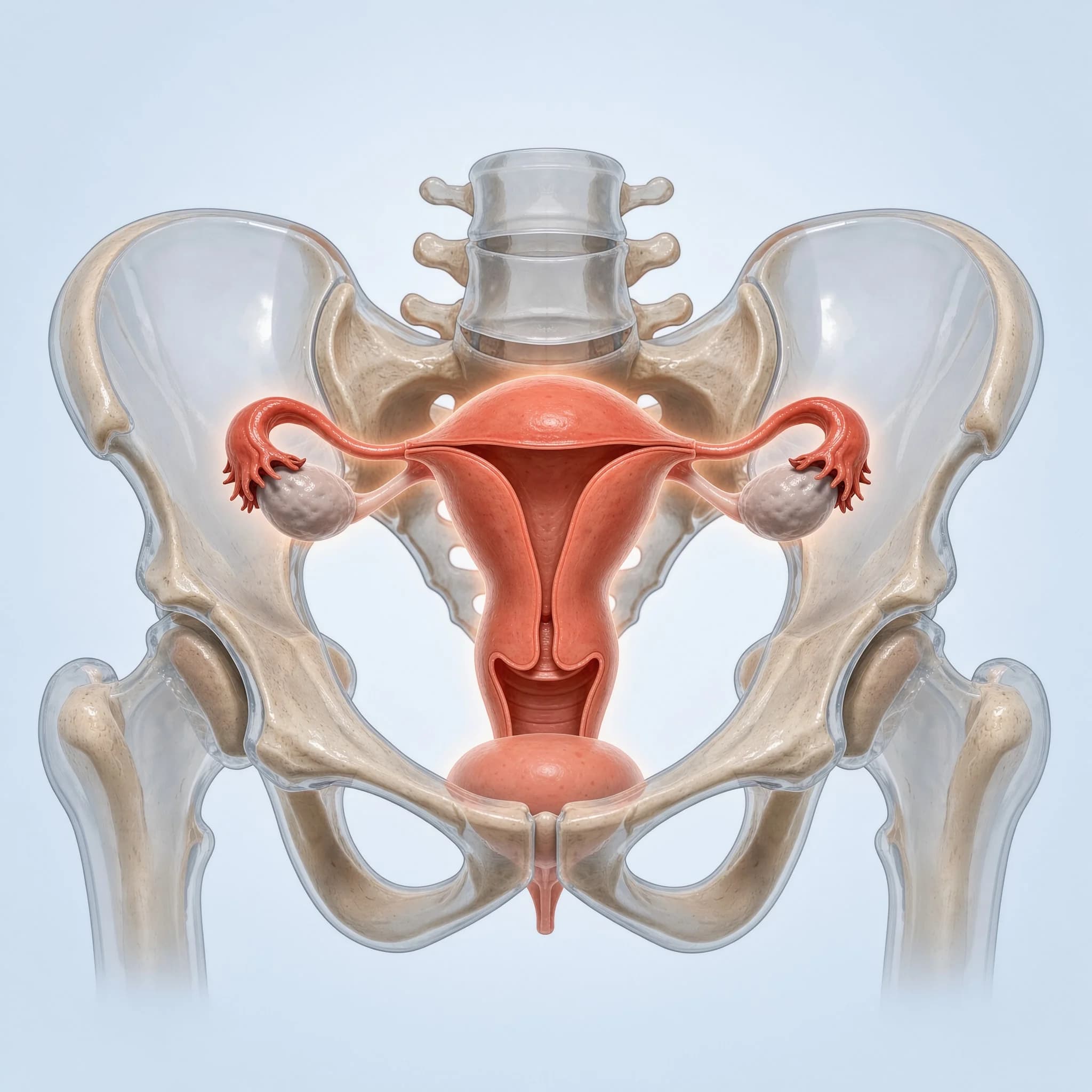
Tubal ligation is an operation that permanently stops pregnancy by closing off or removing both fallopian tubes. These are the two thin tubes that carry an egg from each ovary to the womb (بچہ دانی). With the tubes closed, sperm cannot reach the egg.
Your ovaries and womb are not removed. Your hormones stay the same and you still have monthly periods. It does not protect against sexually transmitted infections.
How is female sterilisation done?
Most tubal ligations are done by keyhole surgery (laparoscopy). Two or three small cuts are made near the belly button, the tummy is filled with gas, and a thin camera is used to find the tubes. The operation usually takes 20 to 30 minutes. There are a few ways to close the tubes:
- Clips or rings: small clips or silicone rings are placed across each tube to block it
- Sealing and cutting: part of each tube is sealed with heat (electrical current) or cut away
- Removing the tubes completely (bilateral salpingectomy): many doctors now recommend this, because research shows most ovarian cancers start in the fallopian tubes, so removing them also lowers the future risk of ovarian cancer
- Mini-laparotomy: if keyhole surgery is not possible, the tubes are reached through one slightly larger cut low on the tummy
- At a caesarean: the tubes can be closed or removed through the same cut, so no extra operation is needed
Is tubal ligation right for me?
Sterilisation is meant to be permanent, so take your time. Ask yourself whether you might want a child in the future, for example if your circumstances or your marriage changed, or after a loss. Women are more likely to regret sterilisation if they are young (especially under 30), have few or no children, have recently lost a child, or are going through difficulties in their relationship.
Deciding during labour or straight after a birth can be convenient, but women who decide at that time are more likely to regret it. It is better to decide during pregnancy, well before the delivery. You may wish to talk it over with your husband or family, and some women also want to think about their faith or speak to a religious scholar they trust. These are personal matters, and Dr. Adil respects your values. He gives you the medical facts without pressure either way, and you can change your mind at any time before the operation.
Alternatives to tubal ligation: the coil, the implant and vasectomy
If you are not completely sure, long-acting reversible contraception is a good alternative. These methods are as effective as sterilisation, safer than surgery, last for several years, and can be removed whenever you want to try for a baby.
- The coil (IUD or hormonal IUS): a small device placed inside the womb
- The implant: a small flexible rod placed under the skin of the upper arm
- Vasectomy for your husband: a simpler, safer operation than female sterilisation, usually done under local anaesthetic. It takes about 2 to 4 months to work, so another method is needed until a sperm test confirms it
How well does it work? Failure and ectopic pregnancy risk
Tubal ligation is one of the most effective forms of contraception, but no method is perfect. Fewer than 1 in 100 women become pregnant in the first year, and about 2 in 100 over 10 years, for example because a tube rarely reopens.
Overall, sterilisation lowers your risk of an ectopic pregnancy (a pregnancy growing outside the womb) compared with using no contraception. But if a pregnancy does happen after sterilisation, about 1 in 3 is ectopic. So if you ever miss a period or have a positive pregnancy test after a tubal ligation, see a doctor straight away, and go to an emergency department if you also have tummy pain, bleeding or feel faint.
Who will do my tubal ligation?
Dr. Adil Shafi performs the operation as lead surgeon. Consultant gynaecologist Dr. Sania Amin, a female doctor, is with you during the operation as co-surgeon and looks after you afterwards. Before any decision, Dr. Adil talks with you about your health, your family plans and the alternatives, and you can ask anything in private.
Your surgery day, step by step
- 1
Arrive at hospital
You check in at the hospital and change into a gown. A pregnancy test is done on the day to make sure you are not already pregnant.
- 2
Meet your surgeon and anaesthetist
Dr. Adil checks once more that this is your own decision and that you understand it is permanent, then you sign the consent form. You can still change your mind at this point. The anaesthetist checks you are fit to go ahead.
- 3
Fall asleep
You usually receive a general anaesthetic, so you are fully asleep and feel nothing. In some cases a local anaesthetic with medicine to relax you is used instead.
- 4
Keyhole surgery
Through two or three small cuts near the belly button, both fallopian tubes are blocked with clips or rings, sealed, or removed. The cuts are closed with dissolvable stitches or skin glue.
- 5
Wake up in recovery
Nurses watch you as you wake. Most women go home the same day, and someone should take you home and stay with you overnight.
Recovery: what to expect
- Day of surgery
Home the same day
Some tummy soreness, bloating and shoulder-tip pain from the gas are normal and settle over a few days with paracetamol or ibuprofen. Light vaginal bleeding for a few days is common; use pads, not tampons.
- Days 1–2
Rest
Rest at home and walk around a little. Keep the small wounds clean and dry as you have been shown.
- Week 1
Keep using contraception
There is a very small chance of pregnancy in the first week, so keep using your usual contraception for 7 days. Avoid intercourse, heavy lifting and exercise for at least 7 days.
- About 1 week
Back to work and routine
Most women return to work and normal housework after about a week. Your follow-up visit checks the wounds and answers any questions.
- 2–6 weeks
After a mini-laparotomy or caesarean
Recovery takes longer after a larger cut. After a mini-laparotomy, expect 2 to 4 weeks off work and no heavy lifting or sport for 4 to 6 weeks. If it was done at a caesarean, you follow the usual caesarean recovery plan.
Risks and warning signs
Possible risks
Every operation carries some risk. Most are uncommon and treatable.
- A small chance that the operation does not work and pregnancy happens later, with a higher chance that such a pregnancy is ectopic
- Regret later, especially for younger women or those whose circumstances change
- Wound infection or a urine infection, usually treated with antibiotics
- Bleeding, or injury to the bowel, bladder or a blood vessel during surgery: rare, and usually repaired at the time
- Blood clots in the legs or lungs, reduced by walking early
- Needing a slightly larger cut if keyhole surgery is not possible
- Risks related to anaesthesia, which are checked for before surgery
Contact us straight away if you have
- A high temperature, or feeling hot, cold or shivery
- Tummy pain that is getting worse, especially with vomiting or loss of appetite
- A wound that is swollen and painful, or leaking blood or pus
- Burning or stinging when passing urine, or needing to pass urine often
- A swollen, painful leg, sudden breathlessness, chest pain or coughing up blood
- A missed period or positive pregnancy test at any time after sterilisation
What affects the cost of tubectomy (female sterilisation) in Pakistan?
The cost of tubectomy (female sterilisation) in Pakistan is different for every patient. It mainly depends on:
- Whether it is done as a planned keyhole operation, by mini-laparotomy, or during a caesarean
- The method used: clips or rings, sealing, or removing the tubes completely
- The type of anaesthesia
- Tests needed before surgery
- Length of hospital stay and the room type you choose
After your consultation, our team will explain the expected cost for your own case clearly.
Ask on WhatsAppQuestions patients often ask
Can tubal ligation be reversed?
Tubal ligation is meant to be permanent. Reversal surgery is difficult, is only possible when enough healthy tube is left, and often does not lead to a pregnancy. It also raises the risk of an ectopic pregnancy. IVF is another option, but there is no guarantee either way, so only choose sterilisation if you are sure.
Can I get pregnant after a tubectomy?
It is rare. Fewer than 1 in 100 women become pregnant in the first year, and about 2 in 100 over 10 years. If you miss a period or have a positive test after sterilisation, see a doctor straight away, because about 1 in 3 of these pregnancies is ectopic.
Will tubal ligation affect my periods, hormones or weight?
No. Your ovaries keep working, so your hormones and periods stay as they were. Sterilisation does not cause weight gain, weakness or a change in sex drive. If you stop a hormonal method such as the pill, your periods may return to how they were before you started it.
Can tubal ligation be done during a caesarean?
Yes. The tubes can be closed or removed through the same cut during a planned caesarean, so you avoid a second operation. It is best to decide during pregnancy, well before the birth, because decisions made in labour are more often regretted.
How long is recovery after tubal ligation?
Most women go home the same day and return to work and normal activities after about a week. Avoid intercourse, heavy lifting and exercise for at least 7 days. Recovery takes longer after a mini-laparotomy (usually 2 to 4 weeks) and, if it was done at a caesarean, follows your caesarean recovery.
Is there an alternative to tubal ligation without surgery?
Yes. The coil (IUD or IUS) and the contraceptive implant are as effective as sterilisation, last for years and can be removed whenever you choose. Vasectomy for your husband is also a simpler, safer permanent option than female sterilisation.
Will a female doctor look after me during and after the surgery?
Yes. Dr. Sania Amin, a female consultant gynaecologist, is co-surgeon in your operation and looks after you after it, with Dr. Adil as lead surgeon. You can discuss private questions about contraception and family planning with her in confidence.
What does tubal ligation cost in Pakistan?
The cost depends on whether it is a planned keyhole operation or done during a caesarean, the method used, the type of anaesthesia, tests needed and the length of stay. After your consultation, our team gives you a clear estimate. Message us on WhatsApp to get started.
Where can I get tubal ligation in Islamabad or Rawalpindi?
Dr. Adil Shafi, lead surgeon, and consultant gynaecologist Dr. Sania Amin see patients at Omer Diagnostics and Specialist Clinics, G-8 Markaz, Islamabad, and operate at the hospital best suited to your procedure and situation. The clinic is easy to reach from Rawalpindi.
Trusted sources for further reading
- What happens during female sterilisation · NHS (UK National Health Service)
- Recovering after female sterilisation · NHS (UK National Health Service)
- Complications of female sterilisation · NHS (UK National Health Service)
- Family Planning: A Global Handbook for Providers, Chapter 12: Female Sterilization · World Health Organization and Johns Hopkins CCP
- Sterilization for Women and Men (FAQ) · ACOG (American College of Obstetricians and Gynecologists)


Medically reviewed by Dr. Adil Shafi, MBBS, MS, CMIS, MRCPS
Lead surgeon, with female consultant gynaecologist Dr. Sania Amin (opens in a new tab) (MBBS, FCPS) as co-surgeon, during and after your operation
Last reviewed
This guide explains Tubal Ligation (Laparoscopic Female Sterilisation) in general terms. Every patient is different, and it does not replace a consultation. Please speak to Dr. Adil about your own situation.
Dr. Adil sees patients from Islamabad and Rawalpindi at his clinic in G-8 Markaz. See clinic timings and directions, or browse all gynae surgery guides.