Do I need keyhole check for unexplained pelvic pain?
These are the common reasons Dr. Adil recommends this treatment:
- Pain low in the tummy or pelvis for 6 months or more, which scans and first treatments have not explained
- Very painful periods or deep pain during intercourse, which may point to endometriosis
- PID that keeps coming back, does not improve with antibiotics, or may have caused an abscess
- A dull, heavy ache in the pelvis that is worse after standing and eases when you lie down
- Pelvic pain together with difficulty getting pregnant
- A scan or blood test suggesting a growth on the ovary that needs a closer look
What is a diagnostic laparoscopy?
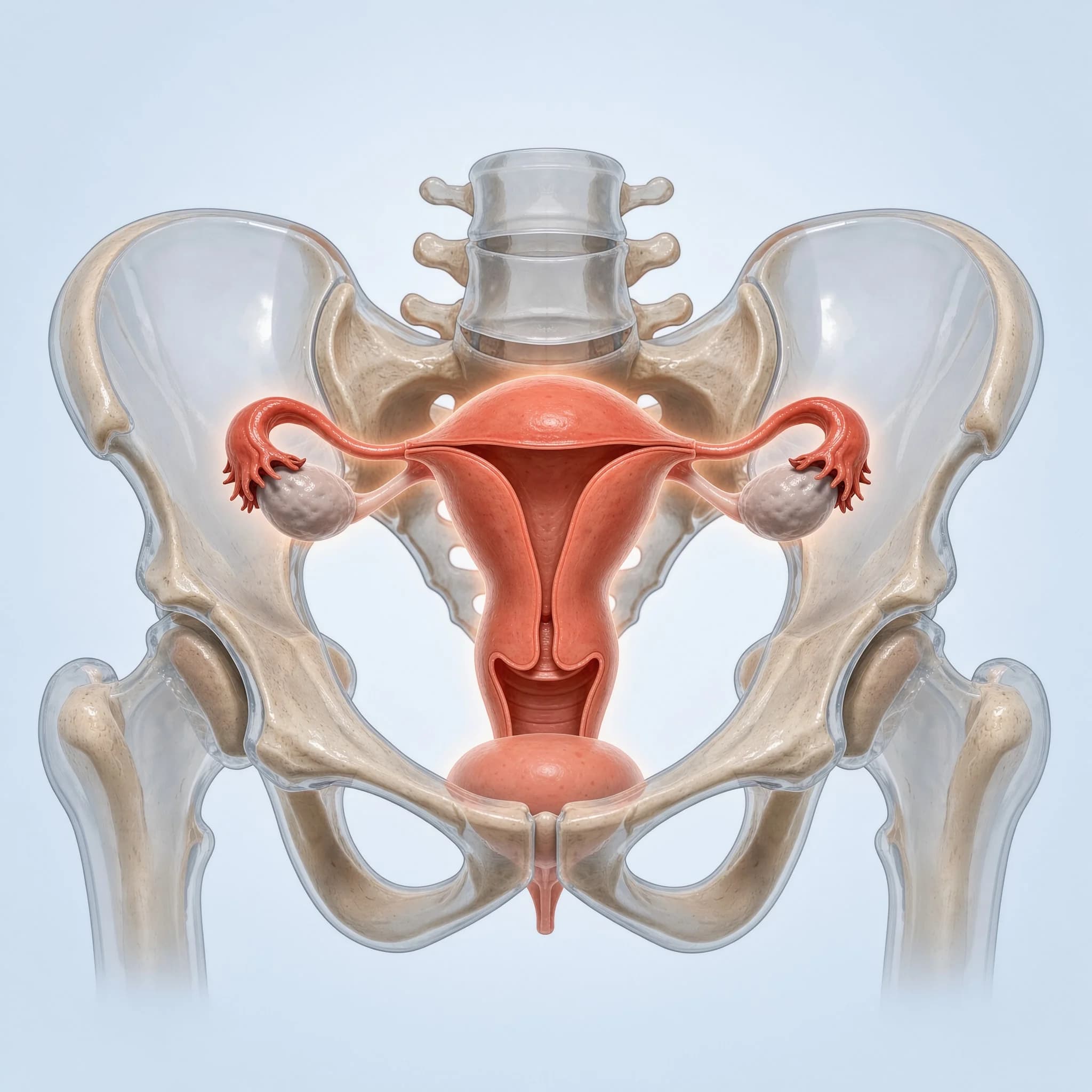
It is a keyhole operation to look inside the tummy and pelvis. Under general anaesthetic, the tummy is gently filled with gas and a thin camera (laparoscope) is passed through a small cut near the belly button. The pictures on a screen show the womb (بچہ دانی), fallopian tubes, ovaries and nearby organs.
If something is found, such as patches of endometriosis or scar tissue, it can often be treated or sampled (biopsy) through one or two more small cuts during the same operation. Dr. Adil discusses with you beforehand what may be done if a problem is found.
Chronic pelvic pain: when does laparoscopy help?
Chronic pelvic pain is pain in the lower tummy or pelvis that lasts at least 6 months and does not happen only with periods or intercourse. It is a symptom, not a diagnosis, and often more than one thing contributes, including endometriosis, adenomyosis (womb lining growing into the womb muscle), adhesions, irritable bowel syndrome (IBS), bladder problems, or problems with the pelvic muscles or nerves.
A laparoscopy is not usually the first step. A careful history, examination and an ultrasound come first. If your pain follows your monthly cycle, a 3 to 6 month trial of hormone treatment is usually offered before a laparoscopy. A laparoscopy is most useful when endometriosis or adhesions needing treatment are strongly suspected, or when these could be affecting your fertility.
It is important to know the limits. Laparoscopy is the only test that reliably shows endometriosis on the lining of the pelvis and adhesions, but it cannot show IBS or adenomyosis. In one third to one half of women, nothing is found. A normal result is still useful: it makes endometriosis and adhesions much less likely as the cause and points care towards other causes, such as the bowel, bladder or muscles.
Pelvic inflammatory disease (PID): what it is and how it is treated
Pelvic inflammatory disease (PID) is an infection of the womb, fallopian tubes and ovaries. It is usually caused by sexually transmitted infections such as chlamydia or gonorrhoea, but it can also be caused by bacteria that normally live in the vagina, for example after childbirth, a miscarriage, fitting a coil or another procedure that opens the cervix.
Symptoms include pain low in the tummy or pelvis, pain during intercourse, unusual vaginal discharge, bleeding between periods and fever, but some women have no symptoms. Antibiotics are the main treatment for PID: usually an injection and then tablets for 2 weeks. Your husband or partner should be tested and treated too, so the infection does not come back.
A laparoscopy is needed only in some cases: when the diagnosis is unclear and antibiotics are not working, when a collection of pus (tubo-ovarian abscess) does not settle with antibiotics or drainage, or urgently if an abscess bursts. In younger women the aim is always to protect the womb, tubes and ovaries. Untreated or repeated PID can lead to long-term pelvic pain, blocked tubes, difficulty getting pregnant and a higher risk of ectopic pregnancy.
Pelvic adhesions (internal scar tissue)
Adhesions are bands of scar tissue that can stick organs together inside the pelvis. They can form after endometriosis, previous surgery or infection such as PID. Many adhesions cause no symptoms at all, but some may cause pain, especially when an organ stretches.
The evidence is honest but mixed. Cutting fine, thin adhesions has not been shown to relieve pain. Dividing thick adhesions that carry blood vessels may help and is considered during the laparoscopy. Dr. Adil will explain what was found and what was done.
Pelvic congestion syndrome: varicose veins in the pelvis
Pelvic congestion syndrome is pelvic pain linked to enlarged, varicose veins around the ovaries, similar to varicose veins in the legs. It is more common before the menopause. The pain is usually a dull ache, often on one side, worse after standing or walking for a long time and after intercourse, and eased by lying down.
Laparoscopy does not always show it. During the operation you lie tilted head-down and the gas presses on the veins, so enlarged veins can flatten and be missed. It is diagnosed mainly with imaging: an ultrasound first, and sometimes a CT or MRI scan or a vein X-ray (venography). Many women have wide pelvic veins without any pain, so a scan finding alone does not prove the veins are the cause.
Treatment starts with painkillers and, in some women, hormone medicines. If pain stays severe, the main procedure is embolisation by an interventional radiologist: under local anaesthetic and sedation, a thin tube is passed into a vein and the faulty veins are blocked with tiny coils or a sealing agent. Symptoms can return in some women. Dr. Adil will refer you to the right specialist if this is the likely cause.
Staging laparoscopy when gynae cancer is suspected
When scans and blood tests suggest a possible cancer, for example of the ovary, a laparoscopy lets the team look at the ovaries and the lining of the tummy and take small samples (biopsies). This helps confirm the diagnosis and plan the right treatment. When it is also used to check whether a cancer has spread inside the tummy, it is called a staging laparoscopy. Your results are discussed with you in full before any further treatment.
Who will do my diagnostic laparoscopy?
Dr. Adil Shafi performs the operation as lead surgeon. Consultant gynaecologist Dr. Sania Amin, a female doctor, is with you during the operation as co-surgeon and looks after you afterwards. Your history, scans and earlier treatments are reviewed first, so a laparoscopy is only advised when it is likely to help.
Your surgery day, step by step
- 1
Arrive at hospital
You check in at the hospital, change into a gown and meet the nursing team. A pregnancy test is usually done.
- 2
Meet your surgeon and anaesthetist
Dr. Adil goes over the plan, including what may be treated or sampled if something is found and the chance that nothing is found, and you sign the consent form. The anaesthetist checks you are fit to go ahead.
- 3
Fall asleep
You receive a general anaesthetic, so you are fully asleep and feel nothing during the operation.
- 4
Keyhole look inside
The camera is passed through a small cut near the belly button. If endometriosis, adhesions or a cyst are found, they may be treated or sampled through one or two more small cuts.
- 5
Wake up in recovery
Nurses watch you as you wake. You can usually drink within a few hours and go home the same day or the next day.
Recovery: what to expect
- Day of surgery
Rest and first steps
Bloating, tummy cramps, a sore throat and shoulder-tip pain from the gas are normal and settle with paracetamol or ibuprofen. Move around as much as you comfortably can.
- First 48 hours
Home
Do not drive for 48 hours, or until you can do an emergency stop. Keep the wounds dry for 24 hours, then you can shower.
- Week 1
Light activity
Walk daily and do light tasks. Avoid a bath for 2 weeks or until the wounds have healed.
- Up to 10 days
Recovered
Most women recover from a diagnostic laparoscopy within about 10 days, though some need up to 3 weeks before returning to work. Recovery takes longer if treatment was done.
- Follow-up
Results and plan
At your follow-up visit, the findings and any biopsy results are explained and the next steps for your pain are agreed with you.
Risks and warning signs
Possible risks
Every operation carries some risk. Most are uncommon and treatable.
- Finding no clear cause for the pain, which happens in one third to one half of women
- Shoulder-tip pain, bloating and bruising around the cuts, which settle within days
- Wound infection or bleeding
- Injury to the bowel, bladder or a blood vessel: about 2 to 3 in 1,000, and about two thirds of these need a larger open operation to repair
- A hernia at one of the cuts
- Blood clots in the legs or lungs, reduced by moving early
- Very rarely, life-threatening complications (about 1 in 10,000), and risks related to anaesthesia, which are checked for before surgery
Contact us straight away if you have
- A high temperature, or feeling hot, cold or shivery
- Tummy pain or bloating that is getting worse instead of better
- Severe or continuous vomiting
- Pain, swelling, redness, bleeding or pus around a wound
- Unusual vaginal bleeding or discharge
- A painful, swollen leg, difficulty breathing or coughing up blood
What affects the cost of keyhole check for unexplained pelvic pain in Pakistan?
The cost of keyhole check for unexplained pelvic pain in Pakistan is different for every patient. It mainly depends on:
- Whether it is a look only, or treatment such as removing endometriosis or adhesions is also done
- Biopsies and the laboratory report
- Whether it is planned or urgent, for example for a PID abscess
- Scans and blood tests needed beforehand
- Length of hospital stay and the room type you choose
After your consultation, our team will explain the expected cost for your own case clearly.
Ask on WhatsAppQuestions patients often ask
What can a diagnostic laparoscopy find?
It can show endometriosis, adhesions (scar tissue), ovarian cysts, damage from past PID and some growths that need a sample. It cannot show some causes of pelvic pain, such as irritable bowel syndrome or adenomyosis, and it may miss enlarged pelvic veins.
What if my diagnostic laparoscopy finds nothing?
This happens in one third to one half of women and does not mean your pain is not real. It makes conditions such as endometriosis and adhesions much less likely, and helps your doctors look at other causes, such as the bowel, bladder, pelvic muscles or nerves. Dr. Adil will discuss the next steps with you.
Can PID be treated without surgery?
Yes, in most cases. Antibiotics are the main treatment for pelvic inflammatory disease, usually an injection followed by tablets for 2 weeks, and early treatment works best. Surgery is needed only if an abscess forms that does not settle, or if the diagnosis is unclear and antibiotics are not working.
Can pelvic inflammatory disease affect my fertility?
It can, especially if it is not treated early or keeps coming back. PID can scar the fallopian tubes and cause adhesions, which can make it harder to get pregnant and raises the risk of an ectopic pregnancy. A dye test can check whether the tubes are open.
Will a laparoscopy show pelvic congestion syndrome?
Not always. During laparoscopy you lie tilted head-down and the gas presses on the veins, so enlarged pelvic veins can flatten and be missed. Pelvic congestion syndrome is diagnosed mainly with scans, and the main procedure for it, embolisation, is done by an interventional radiologist.
How long is recovery after a diagnostic laparoscopy?
Most women go home the same day or the next day and recover within about 10 days, though some need up to 3 weeks before going back to work. If treatment such as removing endometriosis was done, recovery takes longer.
Will a female doctor look after me during and after the surgery?
Yes. Dr. Sania Amin, a female consultant gynaecologist, is co-surgeon in your operation and looks after you after it, with Dr. Adil as lead surgeon. You can discuss private symptoms such as pain during intercourse or discharge with her in confidence.
What does a diagnostic laparoscopy cost in Pakistan?
The cost depends on whether it is a look only or treatment is also done, any biopsies, whether it is planned or urgent, tests needed beforehand and the length of stay. After your consultation, our team gives you a clear estimate. Message us on WhatsApp to get started.
Where can I get a diagnostic laparoscopy in Islamabad or Rawalpindi?
Dr. Adil Shafi, lead surgeon, and consultant gynaecologist Dr. Sania Amin see patients at Omer Diagnostics and Specialist Clinics, G-8 Markaz, Islamabad, and operate at the hospital best suited to your procedure and situation. Women from across Islamabad and Rawalpindi can reach the clinic easily.
Trusted sources for further reading
- The Initial Management of Chronic Pelvic Pain (Green-top Guideline No. 41) · RCOG (Royal College of Obstetricians and Gynaecologists)
- Pelvic inflammatory disease · NHS (UK National Health Service)
- Pelvic inflammatory disease (PID) · MSD Manual Professional Version
- Pelvic venous disorders (pelvic congestion syndrome) · MSD Manual Professional Version
- Laparoscopy (keyhole surgery) · NHS (UK National Health Service)

Medically reviewed by Dr. Adil Shafi, MBBS, MS, CMIS, MRCPS
Lead surgeon, with female consultant gynaecologist Dr. Sania Amin (opens in a new tab) (MBBS, FCPS) as co-surgeon, during and after your operation
Last reviewed
This guide explains Diagnostic Laparoscopy for Pelvic Pain in general terms. Every patient is different, and it does not replace a consultation. Please speak to Dr. Adil about your own situation.
Dr. Adil sees patients from Islamabad and Rawalpindi at his clinic in G-8 Markaz. See clinic timings and directions, or browse all gynae surgery guides.